Auto Welding Machine for Pipe: Key Parameters You Should Know
2025-12-17 15:55:27
In automatic pipe welding projects, what truly determines welding quality and system stability is not whether it's "automatic," but rather the equipment's engineering capabilities in controlling key parameters. Many projects overlook these details during the initial selection phase, leading to poor weld consistency, irreproducible parameters, and even the inability of the automation system to operate stably in the long term.
This article systematically analyzes the technical parameters that must be focused on in the practical use of auto welding machine for pipe from an engineering application perspective. It is suitable for technical personnel involved in equipment selection, process development, or production line planning.
1. Output Characteristics and Response Capability of the Welding Power Supply
In an auto welding machine for pipe system, the welding power supply is not simply an "accessory," but the core of the entire system.
Engineers need to focus on:
Current output range and minimum adjustment step
Peak/base current switching response speed during pulsed TIG welding
Current stability during long-term welding processes
For automatic pipe welding machines, the dynamic response capability of the power supply directly determines whether the weld bead formation is uniform, especially in thin-walled pipes or stainless steel pipe welding, where current fluctuations can quickly amplify into weld defects.
2. Welding Head Rotation Accuracy and Travel Consistency
Many auto welding machine for pipe appear similar in their parameter specifications, but the mechanical precision of the welding head varies significantly.
Engineers usually focus on:
Rotation drive method (servo/stepper)
Closed-loop control capability of circumferential travel speed
Presence of jitter or crawling during low-speed welding
In actual projects, if the travel speed is unstable, even if the welding current is set correctly, the weld width and penetration depth will show significant fluctuations. This is a common problem with many low-end auto pipe welding machine for sale.
3. Segmented Welding Parameter Control Capability
A truly engineering-grade auto welding machine for pipe almost certainly supports segmented parameter control during the welding process.
Typical examples include:
Arc starting segment (to prevent undercut and lack of fusion)
In contrast, automatic pipe welding machine that can only set a single current and speed find it difficult to guarantee consistent weld quality under complex working conditions.
4. Repeatability of Pipe Alignment and Clamping Systems
Welding problems often stem not entirely from the welding process itself, but from the clamping and alignment.
In the engineering design of an auto welding machine for pipe, the alignment system needs to meet the following requirements:
Repeatable coaxial alignment accuracy
Stable and controllable clamping force
Repeatable positioning capability after switching between different pipe diameters
If the alignment accuracy is insufficient, even with identical welding parameters, weld seam offset or insufficient penetration may occur, which is particularly critical in automated production lines.
5. Synchronization and Stability of the Wire Feeding System
In processes requiring filler wire, the wire feeding system is a crucial factor in determining weld seam formation.
Engineering considerations include:
Whether the wire feeding speed is linked to the welding current
Smoothness of low-speed wire feeding
Repeatability after long-term operation
Many auto welding machine for pipe perform well during demonstrations, but in continuous production, wire feeding fluctuations can directly lead to inconsistent weld seam width.
6. Control System and Parameter Reproducibility
From an engineering management perspective, the value of pipe welding automation is not just "automatic welding," but "reproducibility."
A mature automatic pipe welding machine should possess:
Welding program storage and retrieval
Parameter locking and access control
Process database for different pipe diameters and wall thicknesses
This is why many factories, when choosing a China auto pipe welding machine for sale, are starting to focus on the software system rather than just the hardware configuration.
7. Continuous Operation Capability and Thermal Stability
In real production environments, auto welding machine for pipe often need to operate continuously for several hours or even longer.
Key engineering evaluation points include:
Heat dissipation design of the power supply and drive system
Parameter drift after long-term operation
Impact of ambient temperature changes on welding quality
Only equipment that performs stably under these conditions is truly suitable for automated production lines.
8. Conclusion
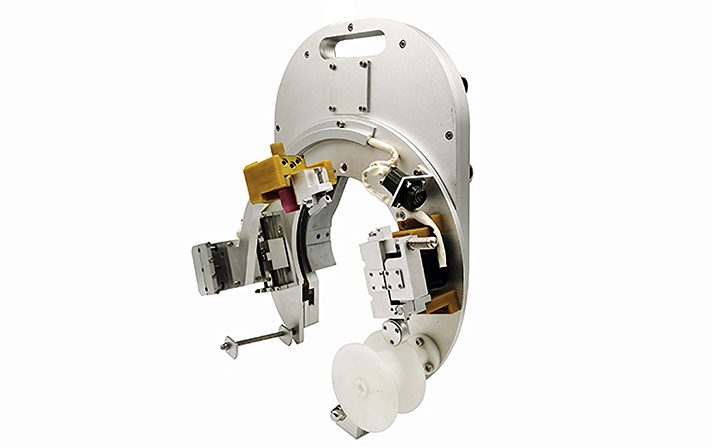
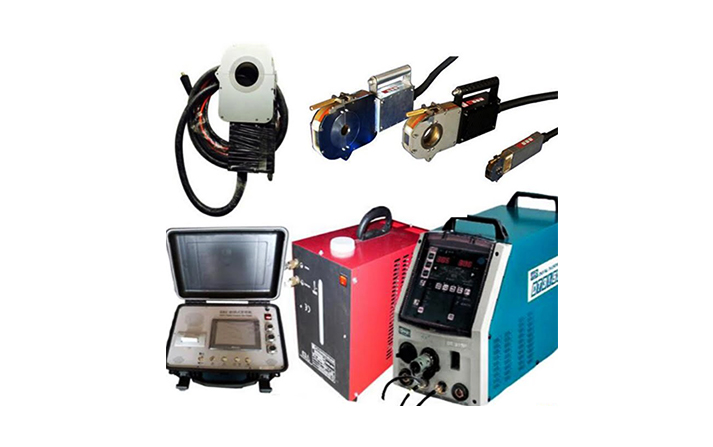
From an engineering perspective, an auto welding machine for pipe is essentially a highly integrated electromechanical welding system, not a single piece of equipment. The welding power supply, rotating mechanism, control system, fixture accuracy, and software logic all collectively determine the final welding quality.
When choosing an automatic pipe welding machine for sale, focusing solely on price or basic parameters often leads to higher debugging and rework costs later on. Truly reliable pipe welding automation is built upon a deep understanding of these critical technical parameters.





 Chinese
 English
 OA
OA Current location:
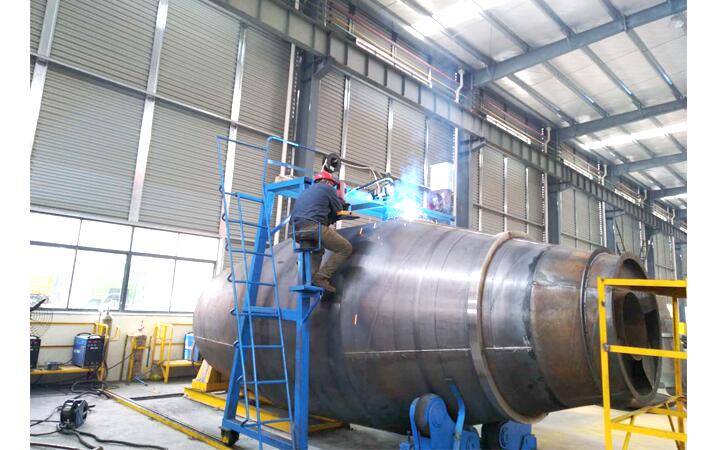 Concrete Mixer Drum Robotic Welding Solutions
 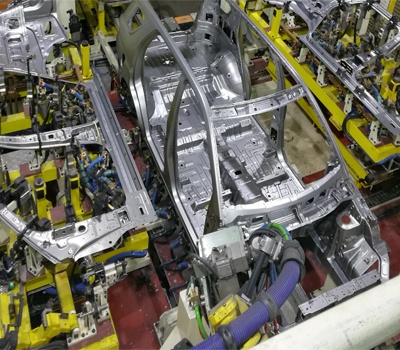 Automobile Body Production Line Welding Fixtures
 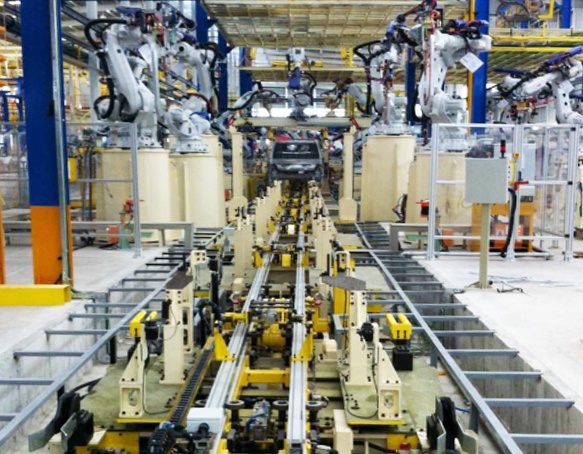 Automotive Body Welding Automated Manufacturing Solutions
 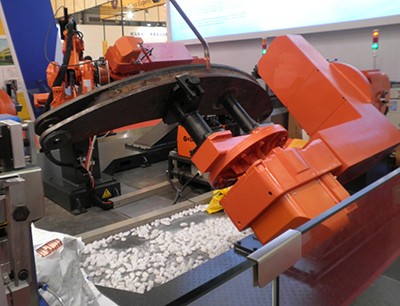 Bulldozer beam and bucket robot welding cobot assembly line
  Suspension parts of semi-trailer fully automated production line